


Choosing truly sustainable gifts can feel overwhelming when greenwashing clouds every product claim and complex lifecycles hide environmental costs. You want to give meaningful, eco-friendly decorative lighting that genuinely reduces impact, but vague marketing makes it hard to separate authentic sustainability from clever branding. This guide provides a clear, methodical workflow to confidently select sustainable decorative lighting gifts for personal use or special occasions. You’ll learn to evaluate materials, verify certifications, assess energy efficiency, and present gifts that align with your values while delighting recipients.
Table of Contents
- Understanding Sustainable Gift-Giving Essentials
- Preparing Your Sustainable Gift Ideas Workflow
- Executing The Sustainable Gift Selection
- Verifying And Presenting Your Sustainable Gift
- Discover Unique Sustainable Lamp Gifts At Lumo Bloc
- Frequently Asked Questions
Key takeaways
| Point | Details |
|---|---|
| Lifecycle thinking | Sustainable gift-giving requires considering every stage from material sourcing through manufacturing, use, and disposal. |
| Ethical verification | Fair Trade and B Corp certifications ensure products meet genuine ethical standards beyond marketing claims. |
| Energy efficiency | LED and solar-powered lighting options dramatically reduce environmental impact over traditional incandescent bulbs. |
| Circular design | Products designed for disassembly and recyclability fit circular economy principles and minimise landfill waste. |
| Transparent sourcing | Manufacturers sharing detailed sourcing and labour information demonstrate authentic commitment to sustainability. |
Understanding sustainable gift-giving essentials
Before diving into product selection, you need foundational knowledge about what makes gifts genuinely sustainable. Sustainable gift-giving involves considering the entire lifecycle of a product, from sourcing materials to manufacturing, packaging, and disposal. Life Cycle Assessments evaluate environmental impact at every stage, revealing hidden costs that marketing glosses over.
Ethical sourcing ensures products aren’t made by exploiting workers or communities. When manufacturers prioritise fair wages, safe conditions, and respectful partnerships, they create positive social impact alongside environmental benefits. Certifications like Fair Trade and B Corp provide assurance that products meet ethical standards, offering third-party verification you can trust.
Sustainable materials form the backbone of eco-friendly products. Look for renewable resources like bamboo that regenerate quickly, recycled materials that divert waste from landfills, or bioplastics derived from plants rather than petroleum. These choices reduce extraction of virgin resources and often require less energy to process.
The circular economy framework guides sustainable design by eliminating waste through continuous material cycling. Products designed for repair, refurbishment, and eventual recycling keep materials in use rather than ending up in landfills. This approach contrasts sharply with traditional linear models of make, use, dispose.
Pro Tip: Always verify certifications by checking official registries rather than trusting product labels alone. Greenwashing thrives on vague eco-friendly claims without substantive proof, so demand transparency.
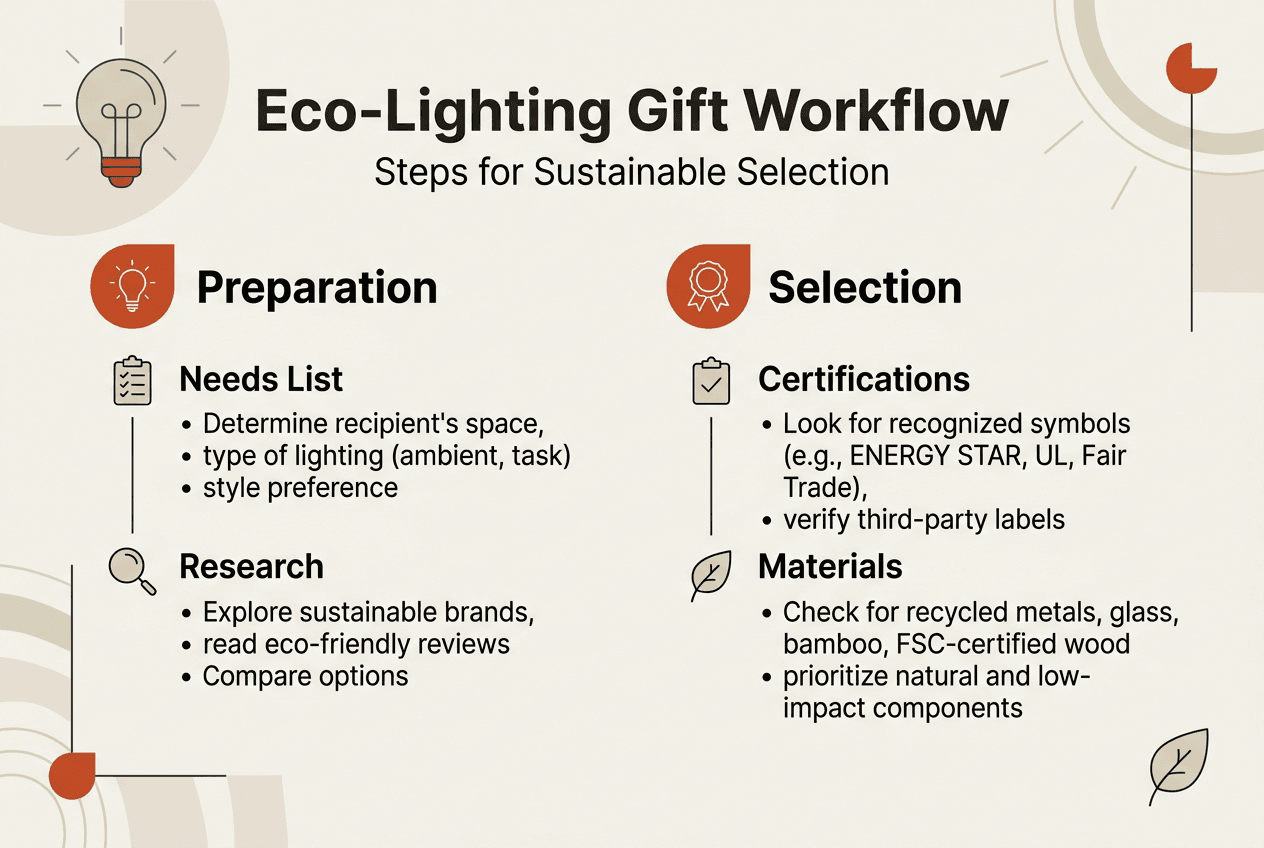
For decorative lighting specifically, sustainability encompasses energy consumption during use, material choices in construction, and end-of-life disposal options. A decorative home lighting workflow helps you systematically evaluate these factors rather than relying on gut feelings or attractive packaging.
Preparing your sustainable gift ideas workflow
Effective sustainable gift selection starts with thorough preparation before you browse products. This groundwork ensures you make informed choices aligned with both environmental values and recipient needs.
Start by identifying the gift recipient’s specific needs and setting. Consider whether the lighting will serve as ambient mood lighting in a bedroom, decorative accent in a living space, or functional task lighting. Understanding the intended use helps you select appropriate brightness levels, colour temperatures, and design aesthetics that the recipient will actually use rather than store away.
Research lighting technologies to understand your options. Eco-friendly decorative lighting includes LED lights, solar-powered lights, and sustainable materials like bamboo or recycled glass. LEDs consume up to 75% less energy than incandescent bulbs and last 25 times longer, dramatically reducing both operating costs and replacement waste. Solar-powered options eliminate grid electricity entirely for appropriate applications.
Evaluate product materials for genuine sustainability credentials. Bamboo grows rapidly without pesticides and regenerates from roots after harvesting. Recycled glass diverts waste while requiring less energy to process than virgin materials. Bioplastics made from corn starch or sugarcane offer petroleum-free alternatives, though you should verify compostability claims and end-of-life options.
Consider energy consumption and product lifespan together for accurate sustainability assessment. A slightly higher-energy product that lasts 20 years typically outperforms an ultra-efficient option that fails after two years. Calculate total lifecycle energy by multiplying daily consumption by expected lifespan, then compare options on equal footing.

Investigate packaging practices before purchase. Excessive plastic clamshells, foam inserts, and multi-layer wrapping create unnecessary waste that undermines product sustainability. Look for manufacturers using recycled cardboard, minimal packaging, or innovative solutions like mushroom-based protective materials.
Explore sustainable lighting options to understand the full range of technologies and materials available. This research phase prevents impulse purchases based on attractive marketing and builds confidence in your final selection.
Executing the sustainable gift selection
With preparation complete, you’re ready to systematically evaluate and select the most sustainable decorative lighting gift. This execution phase applies your research to real product decisions.
Compare traditional and sustainable lighting options across key metrics. Traditional incandescent bulbs convert only 5% of energy to light, wasting the rest as heat, while LEDs achieve 40% efficiency. Halogen bulbs offer slightly better performance than incandescent but still lag far behind LEDs. This efficiency gap translates to dramatic differences in lifetime energy consumption and associated emissions.
| Lighting Type | Energy Efficiency | Average Lifespan | Material Sustainability | Recyclability |
|---|---|---|---|---|
| Incandescent | 5% efficient | 1,000 hours | Glass, metal | Limited |
| Halogen | 10% efficient | 2,000 hours | Glass, metal | Moderate |
| CFL | 25% efficient | 8,000 hours | Glass, mercury concern | Requires special handling |
| LED | 40% efficient | 25,000+ hours | Various, improving | Increasingly recyclable |
| Solar-powered LED | Grid-free | 15,000+ hours | Solar cells, LED | Moderate |
Verify certifications that provide independent validation of sustainability claims. Energy Star certification ensures products meet strict energy efficiency guidelines set by environmental agencies. Cradle to Cradle certification evaluates material health, recyclability, renewable energy use, water stewardship, and social fairness across five performance tiers. These third-party assessments cut through marketing noise.
Consider innovative production methods that reduce environmental impact. 3D printing with plant-based PLA reduces environmental impact compared to petroleum-based plastics and allows low-waste production. This additive manufacturing creates products layer by layer, using only necessary material rather than cutting away waste from larger blocks.
Prioritise products designed for disassembly and recyclability. The Kakta Table Lamp Large is crafted from bio-based wood composite and recycled materials, designed for recyclability and replaceable parts. When components separate easily, users can replace worn parts rather than discarding entire products, and materials can enter recycling streams at end of life.
Pro Tip: Request detailed information about sourcing and labour practices directly from manufacturers. Transparent companies readily share supply chain details, while vague responses signal potential concerns worth investigating further.
Examine glass block lamps as an example of reclaimed material innovation. These products transform salvaged building materials into decorative lighting, giving new purpose to items otherwise destined for demolition waste. The approach demonstrates how creative design extends material lifecycles.
Evaluate customisation options that enhance longevity. Products with interchangeable components, adjustable brightness, or modular designs adapt to changing needs and preferences rather than becoming obsolete. This flexibility prevents premature disposal when tastes or requirements shift.
Verifying and presenting your sustainable gift
After selecting your sustainable decorative lighting gift, verification and thoughtful presentation complete the workflow and maximise impact.
Verify certification labels match official registries. Many products display certification logos without actually holding valid credentials. Cross-reference product claims against official databases maintained by certifying organisations. This step takes minutes but prevents supporting fraudulent sustainability claims.
Test product energy efficiency and functionality upon receipt. Measure actual power consumption with an electricity monitor to confirm specifications. Check dimming features, colour temperature accuracy, and build quality. Discovering issues before gifting prevents disappointment and allows returns or exchanges.
Use sustainable wrapping options that extend your environmental commitment to presentation. Sustainable packaging using recycled and biodegradable materials significantly reduces waste. Consider reusable fabric wraps, recycled kraft paper with natural twine, or furoshiki cloth wrapping techniques that recipients can reuse indefinitely. Avoid metallised papers, plastic ribbons, and excessive layers that complicate recycling.
Share the gift’s sustainability story to educate and inspire the recipient. Explain the reclaimed materials, ethical manufacturing, or energy-saving features that make this gift special. This context transforms a physical object into a meaningful statement about values and priorities. Recipients often treasure the story as much as the product itself.
Provide maintenance and repair guidance to extend the gift’s lifespan. Include care instructions, replacement part sources, and troubleshooting tips. When recipients understand how to maintain their gift properly, they’ll enjoy years of use rather than premature failure. This knowledge sharing multiplies your sustainable impact.
Explore eco-friendly home décor ideas to complement your lighting gift with coordinated sustainable accessories. A cohesive approach to sustainable décor creates stronger visual impact and reinforces environmental values throughout living spaces.
Document your workflow for future gift-giving occasions. Note which evaluation criteria proved most useful, which sources provided reliable information, and which products delivered on sustainability promises. This record streamlines future decisions and helps you refine your approach over time.
Discover unique sustainable lamp gifts at Lumo Bloc
Applying this sustainable gift workflow becomes effortless when you explore curated collections designed with environmental values at their core. Lumo Bloc specialises in handcrafted glass block lamps made in New Zealand from reclaimed building materials, transforming salvaged glass blocks into stunning decorative lighting.
Each lamp combines sustainable materials with energy-efficient LED technology, delivering ambient lighting that minimises environmental impact. The handcrafted manufacturing process emphasises quality and longevity over mass production, creating pieces built to last decades rather than seasons.
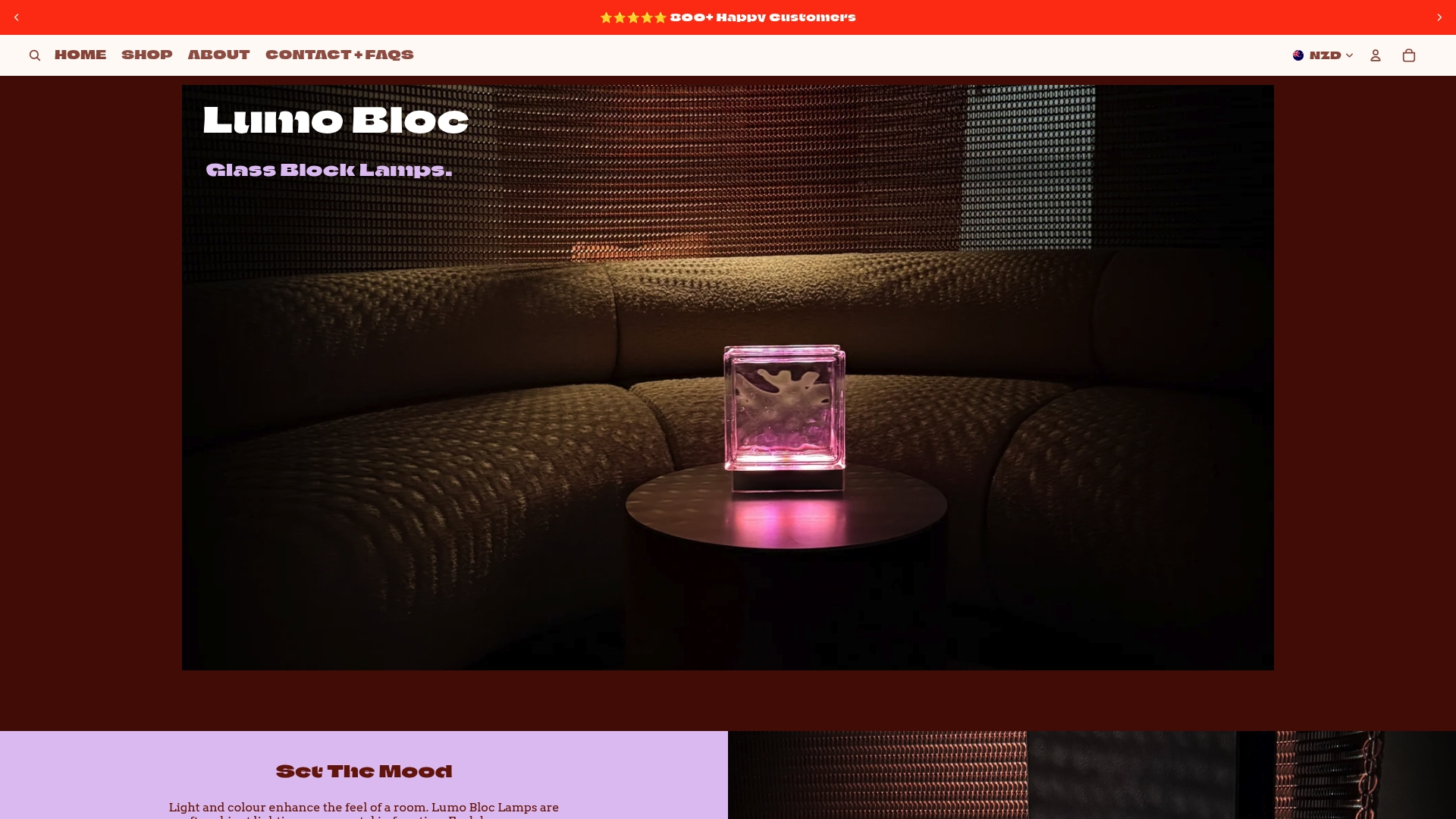
Customisation options including interchangeable coloured acrylic lenses and wireless or wired base configurations let you tailor gifts to recipient preferences while maintaining sustainable principles. Browse unique handmade gift ideas to discover lighting that merges artisanal craftsmanship with eco-conscious design. Explore the handmade designer lamp collection or learn technical details about glass block lamp construction and sustainability features.
Frequently asked questions
What certifications ensure a decorative lamp is sustainably made?
Look for Energy Star certification confirming energy efficiency, Fair Trade or B Corp credentials verifying ethical sourcing and labour practices, and Cradle to Cradle certification evaluating material health and recyclability. These third-party validations provide assurance beyond marketing claims. Always verify certifications through official registries rather than trusting product labels alone.
How can I ensure the packaging of my gift is environmentally friendly?
Choose packaging made from recycled or biodegradable materials like kraft paper, cardboard, or plant-based alternatives. Avoid excessive plastic wrapping, foam inserts, and metallised papers that complicate recycling. Opt for reusable fabric wraps or minimal packaging that recipients can easily recycle or compost. Check eco-friendly home décor ideas for creative sustainable presentation options.
Are sustainable lighting gifts more expensive, and is it worth it?
Initial costs often run higher for sustainable lighting, but durability, energy savings, and longer lifespans offset the premium over time. LED bulbs cost more upfront but save significantly on electricity bills and replacement costs across their 25,000-hour lifespan. 55% of consumers are willing to pay more for sustainable brands, reflecting growing recognition of long-term value. Consider total lifecycle costs rather than purchase price alone.
How do I maintain sustainable decorative lighting to maximise its lifespan?
Clean fixtures regularly with soft, dry cloths to prevent dust buildup that reduces light output and efficiency. Replace components like bulbs or lenses rather than entire fixtures when possible. Store products properly during moves or renovations to prevent damage. Follow manufacturer care instructions specific to materials used, as bamboo, glass, and metal each require different approaches. Understanding why 76% of designers choose customizable lamps reveals how adaptable designs extend functional life.
Can decorative lighting be both sustainable and stylish?
Absolutely. Modern sustainable lighting combines environmental responsibility with sophisticated design that rivals conventional options. Reclaimed materials, natural finishes, and minimalist aesthetics create timeless appeal that transcends trends. Artisanal craftsmanship often produces more distinctive pieces than mass-manufactured alternatives. Sustainable design constraints frequently inspire creative solutions that result in more interesting, conversation-worthy products than traditional manufacturing approaches.